How to visit Manuel Antonio National Park
Manuel Antonio National Park is a compact coastal rainforest reserve best known for combining easy wildlife spotting with swimmable white-sand beaches. It does not feel remote once you are inside: the trails are manageable, but the park is tightly regulated, sells out often, and gets crowded fast after mid-morning. The biggest difference between a smooth visit and a frustrating one is whether you lock in the right date and enter early enough to enjoy active wildlife before the beaches and main loop fill up. This guide covers timing, tickets, routes, and what to expect on the day.
Quick overview: Manuel Antonio National Park at a glance
This is the fast version if you want the decisions that actually change your day.
- When to visit: Wednesday–Monday: 7am–4pm; the park is closed on Tuesdays. 7am–8:30am is noticeably calmer than 10am–1pm, and wildlife is easier to spot before the main trail and beach traffic builds.
- Getting in: Standard adult entry costs $18.08 for non-residents. Guided tours with park entry start from $48.96, while options with hotel transfers start from $75. Booking ahead is recommended, especially during the dry season, weekends, and holidays.
- How long to allow: 4–6 hours works for most visitors. It stretches toward the longer end if you want both major viewpoints and real beach time, not just a quick swim.
- What most people miss: Punta Serrucho and the quieter stretch around Playa Gemelas reward people who do not stop at the first beach and turn back.
- Is a guide worth it? Yes, if this is your first visit and wildlife spotting is a priority; if you mainly want trails and beach time, self-guiding works well once you already know the park layout.
🎟️ Tickets for Manuel Antonio National Park sell out well in advance during December–April, holiday weeks, and busy weekends. Lock in your visit before the time you want is gone.
Jump to what you need
🕒 Where and when to go
🗓️ How much time do you need?
🎟️ Which ticket is right for you?
🗺️ Getting around
🌴 What to see
♿ Facilities and accessibility
Where and when to go

How do you get to Manuel Antonio National Park?
Manuel Antonio National Park is about 7km from central Quepos, at the end of Manuel Antonio village.
Address: Manuel Antonio, Quepos, Puntarenas Province, Costa Rica
- Bus: Quepos–Manuel Antonio route → get off near the park → short walk to the entrance.
- Taxi/rideshare: Get dropped near the park entrance → easiest if you're arriving early or carrying beach gear.
- Car: The park has no official visitor parking. Private parking lots are available near the entrance, typically around ₡3,000–₡5,000 per day; confirm whether the quoted price is hourly or daily before parking.

Getting here from nearby cities
Visitors often come from San José for a long day trip, but staying in Quepos or Manuel Antonio makes an early start much easier.
From San José
- Distance: Around 157km
- Route: Route 27 → Route 34 → Quepos → Manuel Antonio
- Travel time: Allow around 3–3.5 hours by car, depending on traffic.
- Time to budget: A same-day trip is possible, but staying nearby makes it easier to enter early.
From Quepos
- Distance: Around 7km
- Travel time: Around 10–15 minutes by taxi, shuttle, or local bus.
- Time to budget: Quepos is the easiest nearby base if you want an early start without a long transfer.
From Dominical
- Distance: Around 45km
- Travel time: Allow roughly 45–60 minutes by road, depending on traffic.
- Time to budget: Easy for a half-day visit, but start early if you also want beach time inside the park.
Which entrance should you use?
There is one main visitor entrance, so unlike larger parks, you don't need to choose between multiple gates. Have your pre-booked ticket and the ID used for the reservation ready; SINAC requires visitors to present identification with their ticket.
- Main entrance: Located about 7km from Quepos, at the end of Manuel Antonio village.
- Best for: All visitors, whether arriving independently or on a guided tour.
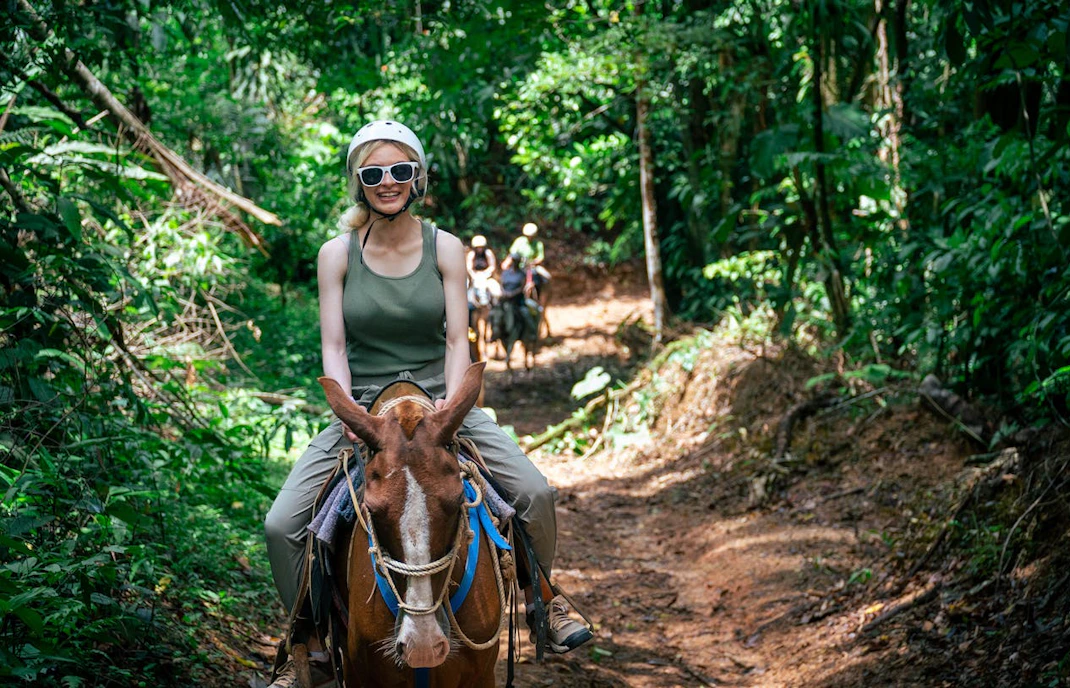
When is Manuel Antonio National Park open?
- Wednesday–Monday: 7am–3pm
The current park-specific SINAC page confirms these hours.
When is it busiest? Late morning into early afternoon generally feels busier, particularly on weekends and during the dry season.
When should you actually go? Aim for 7am–8:30am for cooler trails, more time inside the park, and a better chance of spotting wildlife before the trails get busier.
- Tuesday: Closed
How much time do you need?
| Visit type | Suggested route | Duration | Walking distance | What you get |
|---|---|---|---|---|
Highlights only | Entrance → main wildlife trails → Manuel Antonio Beach → exit | 3–4 hours | Light–moderate | A solid first look at the park with easy wildlife spotting and one beach stop, but you will skip the quieter coves and upper viewpoints. |
Balanced visit | Entrance → Catarata trail* → main trails → Playa Gemelas → Manuel Antonio Beach → exit | 4–5 hours | Moderate | This adds the park's best ocean views and a quieter beach section, which is why it is the sweet spot for most first-time visitors. |
Full exploration | Entrance → main wildlife trails → Miradores/Punta Serrucho viewpoint → Playa Gemelas → Manuel Antonio Beach → Espadilla Sur → exit | 5–6 hours | Moderate–high | You cover the park's main beaches, both key viewpoints, and more wildlife ground, but it is a much hotter day once the sun is high. |
Which Manuel Antonio National Park ticket is best for you?
| Ticket type | What's included | Best for | Price range |
|---|---|---|---|
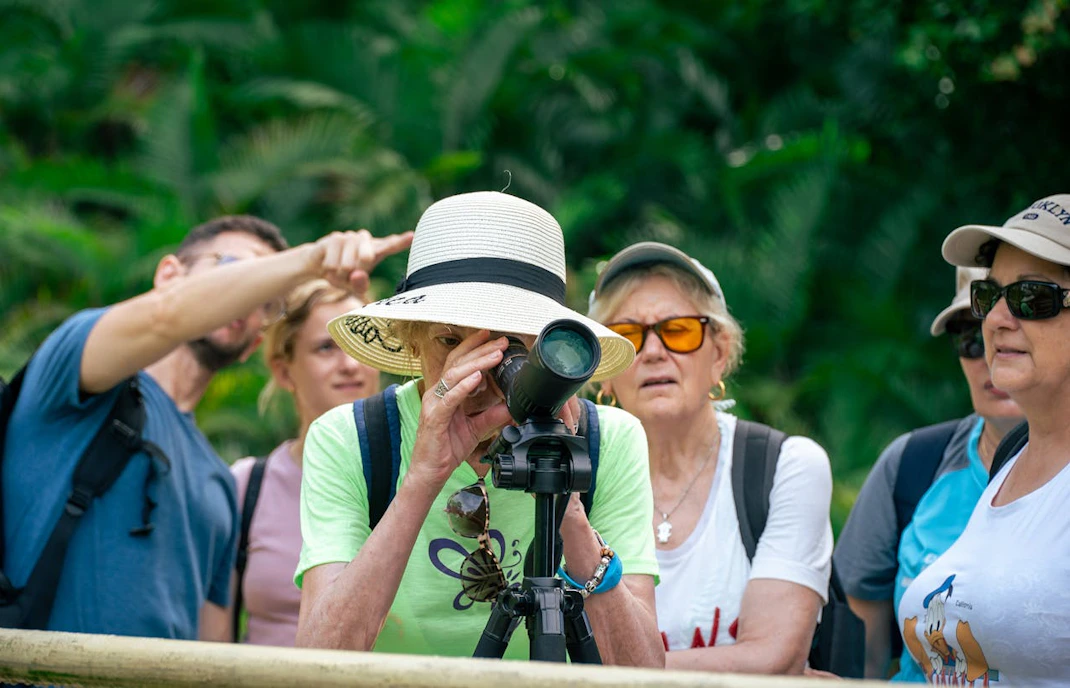
Manuel Antonio National Park Guided Tour with Entry Ticket & Beach Access | Park entry + bilingual naturalist guide + guided rainforest walk + spotting scope + wildlife photo assistance + beach time | A first visit where wildlife spotting is the priority and you don't need transport included | From $48.96 |
Manuel Antonio National Park Guided Tour with Entry & Beach Access + Hotel Transfers | Park entry + bilingual naturalist guide + spotting scope + round-trip hotel transfers + water + beach time | A more convenient visit where you want entry, transport, and wildlife guidance handled together | From $75 |
Getting around
Manuel Antonio National Park is best explored on foot, and planning a simple route helps you balance wildlife trails, viewpoints, and beach time. The trail network begins near the entrance and branches toward the beaches and viewpoints, with signed trails connecting the park's main visitor areas.
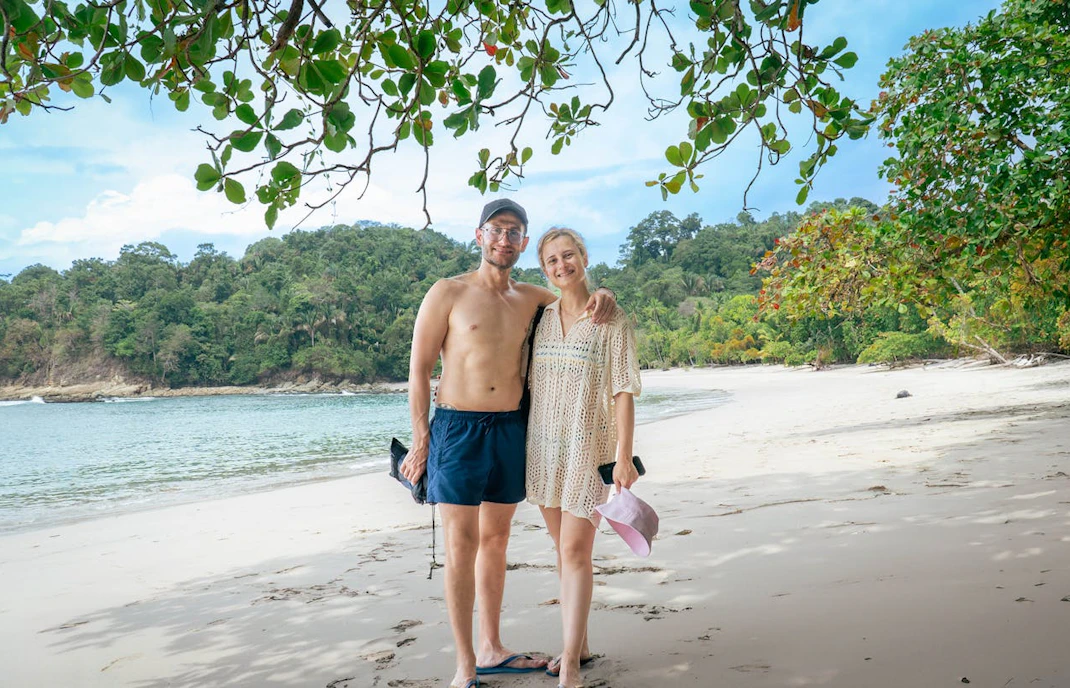
Key areas and route
- Main trail network: Start with the rainforest trails near the entrance, where you can slow down for wildlife spotting before heading toward the coast.
- Miradores & Punta Serrucho: Follow the viewpoint trail for elevated coastal views; SINAC's map shows the Miradores trail at 952m and the route toward Playa Gemelas/Puerto Escondido at 748m.
- Manuel Antonio Beach & Espadilla Sur: The main beach and rest areas are connected by short parallel trails, making them easy to leave until later in your visit.
- Playa Gemelas: A quieter beach stop that can be combined with the viewpoint trails.
Suggested route: Start with the rainforest trails while it's cooler, continue toward the viewpoints and Playa Gemelas, then leave Manuel Antonio Beach and Espadilla Sur for later in your visit.
Note: Punta Catedral trail is temporarily closed, so don't currently build your route around it.
Maps and navigation tools
- Trail map: SINAC provides an official public map showing the entrance, trails, beaches, viewpoints, restrooms, showers, drinking water, and swimming areas.
- Signage: The park says its trails are signposted to help visitors interpret and navigate the park, so self-guiding the main visitor areas is practical.
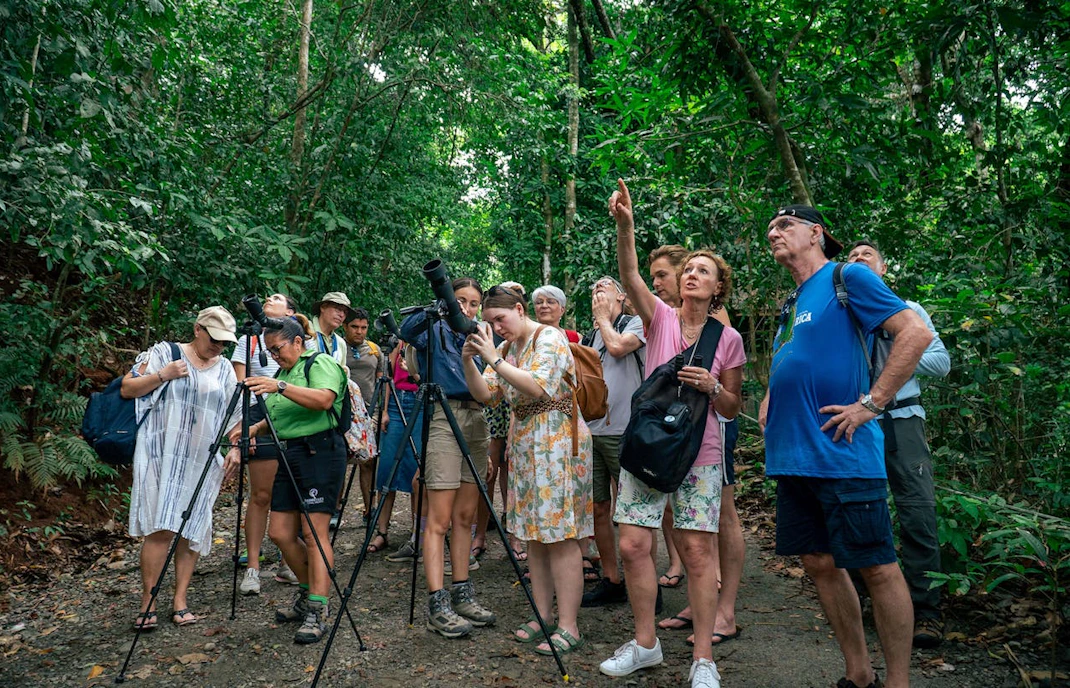
- Guided option: A guide isn't necessary for navigation, but a naturalist guide and spotting scope can make wildlife significantly easier to find.
- Before you go: Check current trail conditions before planning your exact route, particularly because temporary closures can affect which viewpoints you can reach.
💡 Pro tip: Do the rainforest and viewpoint trails before settling at the beach. It saves you from having to restart your longer walk after your beach break.
Manuel Antonio National Park map
Explore the full park map
What is Manuel Antonio National Park worth visiting for?
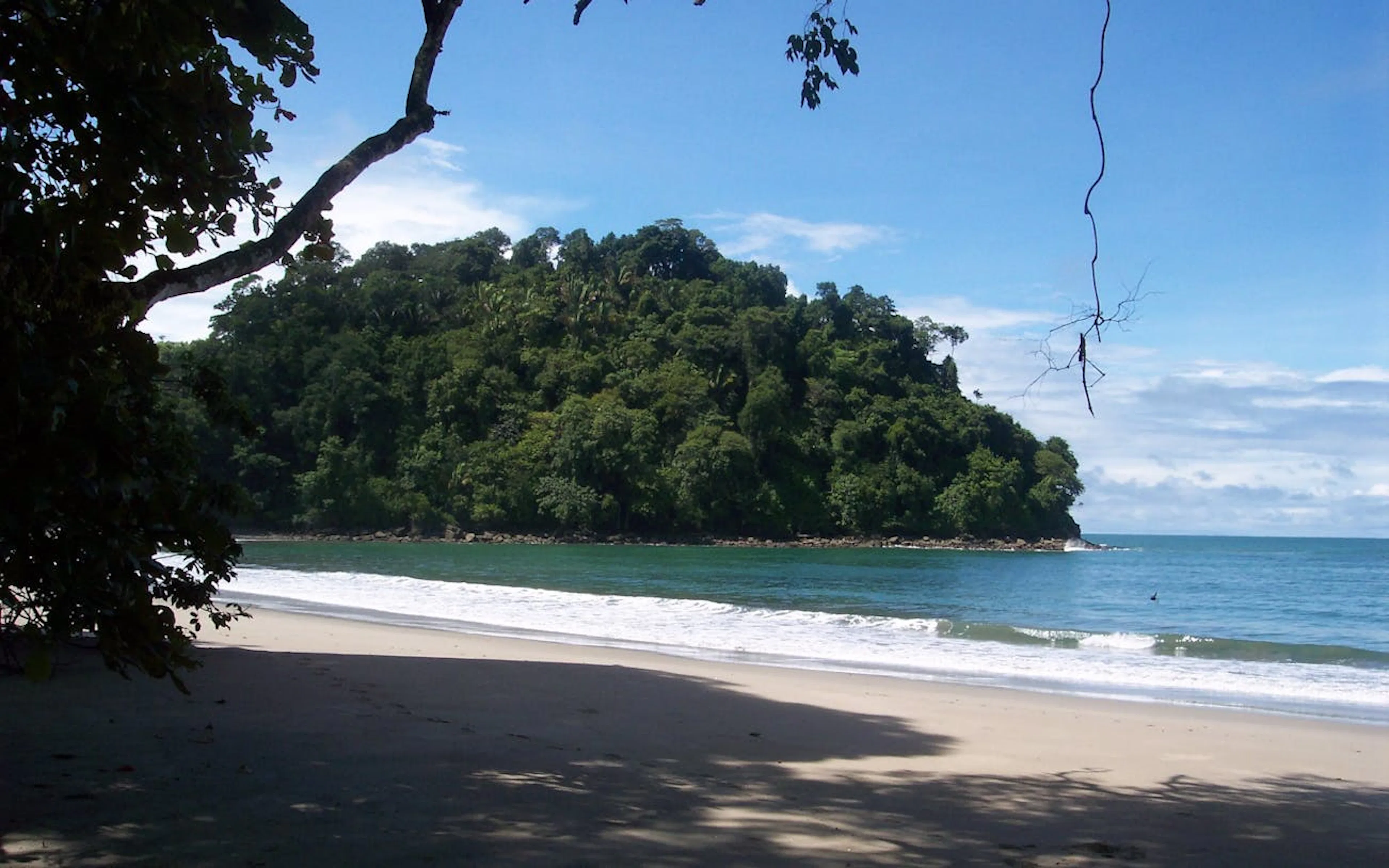
Manuel Antonio Beach
Area type: Beach & marine habitat
The park's best-known beach combines white sand, rainforest, and sheltered water in one stop. Slow down near the edges of the beach, where snorkeling can reveal marine life and coral, rather than treating it only as a swimming stop. Keep an eye on the forest behind you too — wildlife regularly appears close to the coast.
Where to find it: Follow the main trail network from the entrance toward the Manuel Antonio Beach trail.
Mirador Punta Serrucho
Area type: Coastal viewpoint
This is the viewpoint I'd use instead of Punta Catedral while the latter remains closed. Punta Serrucho overlooks an unusual broken rock formation shaped by geological movement along a tectonic fault. The Mirador trail also gives you elevated views toward Puerto Escondido and the surrounding coastline, making it one of the park's strongest landscape stops.
Where to find it: Follow the Mirador trail beyond the Playa Gemelas trail junction.
Playa Gemelas
Area type: Twin beach
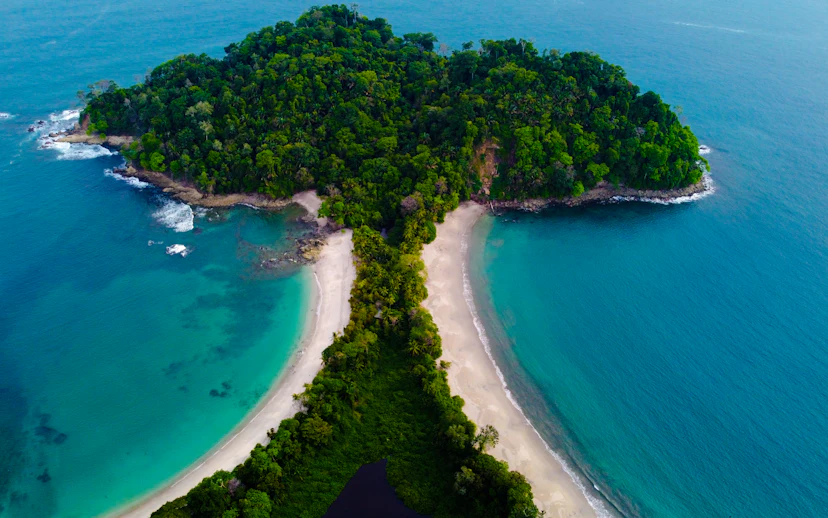
Playa Gemelas is split into two sections by a rock formation, giving it a more enclosed feel than Manuel Antonio Beach. Its shoreline continues to change as streams, ocean currents, winds, and tectonic movement reshape the beach. It is particularly worth adding if you want to see more of the park than its headline beach.
Where to find it: Follow the Playa Gemelas trail from the main visitor trail network.
Mangrove habitat
Area type: Wetland ecosystem
Don't rush through the forest between the entrance and beaches. Manuel Antonio protects around 18 hectares of mangrove habitat, with fresh and salt water supporting red, piñuela, and caballero mangroves. You can see this ecosystem along trails running parallel to Manuel Antonio Beach and Espadilla Sur — a completely different landscape from the park's beaches and viewpoints.
Where to find it: Along the trails running parallel to Manuel Antonio Beach and Espadilla Sur.
Wildlife along the rainforest trails
Area type: Rainforest wildlife
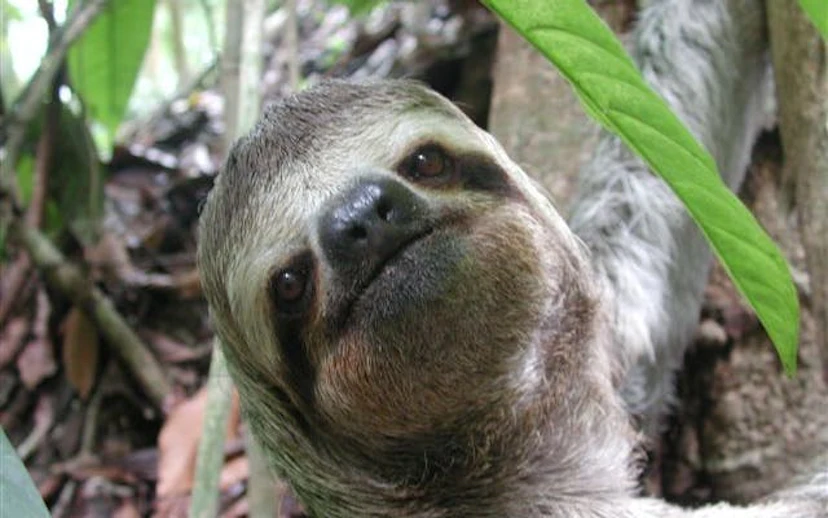
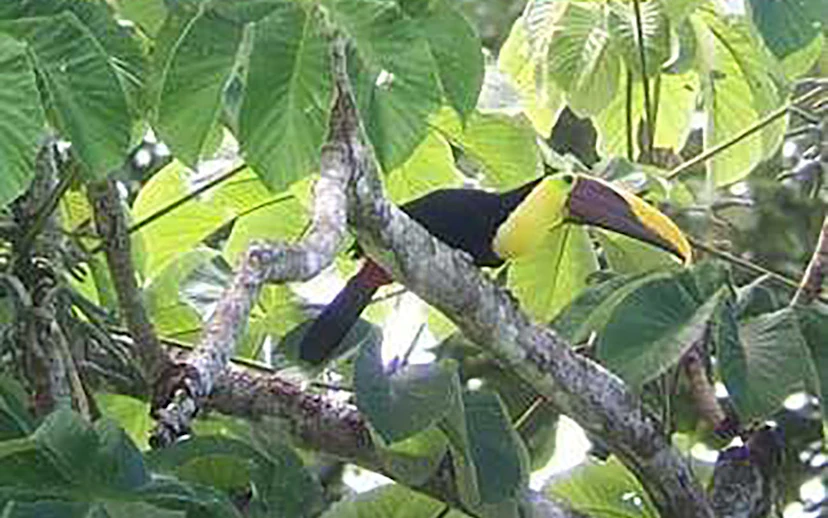
The animals aren't confined to one designated wildlife zone, so slow down throughout the forest trails. Manuel Antonio records 109 mammal and roughly 352 bird species, with standout sightings including squirrel monkeys, white-faced capuchins, howler monkeys, two- and three-toed sloths, raccoons, coatis, and toucanets. Look into the canopy rather than only along the path — this is where a naturalist guide and spotting scope can make a noticeable difference.
Where to find it: Throughout the forest trail network, particularly before reaching the main beach areas.
Facilities and accessibility
- 🎒 Lockers: Rental lockers are available near the park entrance during opening hours, useful for storing belongings you don't want to carry along the trails or to the beach.
- 🚻 Restrooms & changing facilities: Restrooms, changing rooms, and showers are available inside the park. Soap and shampoo aren't permitted in the showers.
- 🍽️ Food & drinks: A concession area sells food and drinks. Food can only be consumed in the designated area, rather than along the trails or beaches.
- 🛍️ Craft store: A small craft store is available for souvenirs and locally made items.
- 💧 Drinking water: Drinking-water fountains are available along the Perezoso vehicle trail and near the Manuel Antonio and Espadilla Sur beach trails. Bring a reusable bottle.
- 🅿️ Parking: There is no official visitor parking inside the park. If you're driving, use one of the private parking facilities outside the entrance.

- ♿ Mobility: The park has the 726m El Manglar elevated accessible trail, with 10 rest bays and interpretive signage. A 164m accessible walkway provides access toward the sea, and an amphibious wheelchair can be reserved in advance.
- 🥾 Terrain: Accessibility varies beyond the dedicated accessible route. Other trails can include natural surfaces, inclines, roots, steps, and beach sand, so not every part of the park is suitable for wheelchairs or visitors with limited mobility.
- 👁️ Visual impairments: The park has interpretive signage, but official information does not list dedicated tactile maps or audio-description services. Consider visiting with a companion or naturalist guide if additional assistance is needed.
- 🧠 Sensory needs: There are no dedicated sensory sessions listed. An early visit generally means cooler conditions and fewer visitors than later in the day.
- 👶 Strollers: The accessible El Manglar route is the most practical option with a stroller. Natural trails and sandy beach sections can be considerably harder to navigate.
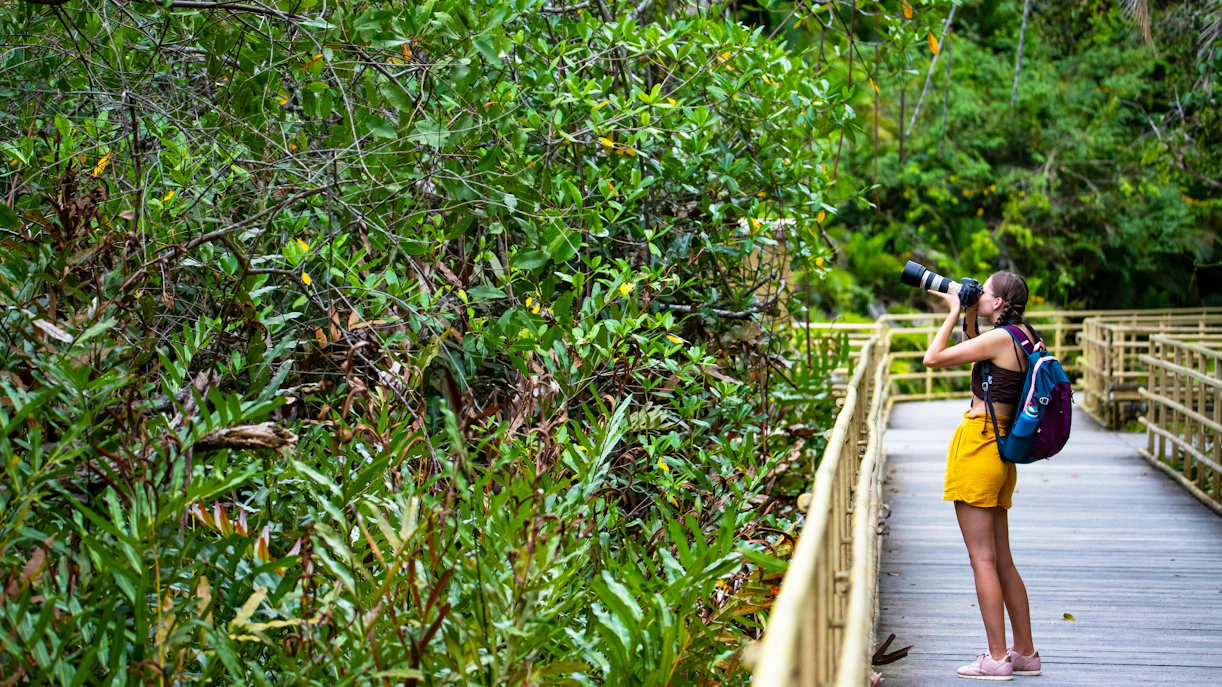
Manuel Antonio works particularly well for families because you can combine wildlife spotting, short rainforest walks, and beach time within the same visit.
- 🕐 Time: Plan around 3–4 hours with younger children rather than trying to cover every trail. Combine a wildlife-focused walk with one beach stop for a manageable visit.
- 🚻 Facilities: Restrooms, changing areas, showers, lockers, drinking-water fountains, and a concession area make it easier to plan breaks during the day.
- 🐒 Wildlife: Turn the rainforest walk into a spotting game for monkeys, sloths, iguanas, birds, and other wildlife. A naturalist guide with a spotting scope can make harder-to-see animals easier for children to find.
- 🎒 What to bring: Pack swimwear, a towel, sun protection, comfortable walking shoes, and a reusable water bottle. Starting early also means cooler walking conditions.
- 🏖️ After your visit: If the family still has energy, Espadilla Norte outside the national park is an easy option for more beach time.
Rules and restrictions at Manuel Antonio National Park
What you need to know before you go
- 🎟️ Entry requirement: Tickets are purchased online in advance, and you'll need to show the ID used for your reservation with your ticket at the entrance. Tickets are personal and valid for one entry.
- 🎒 What to bring: Wear suitable walking shoes for the forest trails and bring a reusable water bottle. Drinking-water refill points are available inside the park.
- 🔄 Re-entry: Your admission ticket is valid only once, so plan your trails, wildlife viewing, and beach time before leaving the park.
Not allowed
- 🍴 Food & drink: Don't bring food or drinks into the park unless they fall under exceptions specifically permitted by the park administration. Food purchased inside can only be eaten in the designated concession area.
- 🚭 Smoking & alcohol: Smoking, alcohol, and drugs are prohibited inside the park.
- 🐕 Pets: Pets aren't permitted. The park regulations provide an exception for assistance dogs under Costa Rican accessibility law.
- 🏖️ Beach gear: Umbrellas, balls, tents, hammocks, beach chairs, bicycles, and drones aren't permitted.
- 🐒 Wildlife: Don't feed, touch, approach, or otherwise interact with wildlife. Keep food and belongings away from animals.
Photography
- 📷 Personal photography is allowed, but wildlife protection rules are strict. Flash photography and selfies with wildlife are prohibited, as are lasers, reflective devices, recordings, or sounds used to attract animals. Drones are also prohibited inside the park.
- Keep a respectful distance from animals and photograph them without interfering with their natural behaviour.
Good to know
- 📅 Tuesday closure: Manuel Antonio National Park is open Wednesday to Monday, 7am–3pm, and closed every Tuesday.
- 🥾 Stay on the trails: Don't leave designated trails, climb trees, or sit or climb on railings and signs.
- 🌿 Leave nature where it is: Removing plants, animals, rocks, wood, or other natural material from the protected area is prohibited.
Practical tips
- 🎟️ Book before you arrive: Tickets are sold online rather than at the park entrance, so secure your date before travelling to Manuel Antonio. In busy periods, don't leave the booking until you reach Quepos.
- 🥾 Do the longer trails before the beach: Explore the rainforest and viewpoints first, then finish with Manuel Antonio Beach or Espadilla Sur. Once you've stopped for a swim, restarting a longer forest walk is much less appealing.
- 🌅 Start early: Aim for an early entry, particularly in high season. You'll have more of the day for the trails and beaches, while SINAC specifically recommends early visits during the wetter September–October period.
- 🚗 Allow extra time if you're driving: There is no official visitor parking, and the single road between Quepos and Manuel Antonio can become heavily congested during high season. Use a private lot near the entrance and check whether its quoted price is hourly or daily before leaving your car.
- 🎒 Pack for trails, not just the beach: Wear proper walking footwear rather than sandals for the forest trails, and bring a reusable water bottle. Refill fountains are available along several visitor trails.
- 🌧️ Plan differently in the rainy season: The seasonal waterfall is best seen during the rains, while September and October generally see fewer visitors. Go early and bring appropriate rain protection rather than letting an afternoon shower dictate your entire visit.
What else is worth visiting near Manuel Antonio National Park?
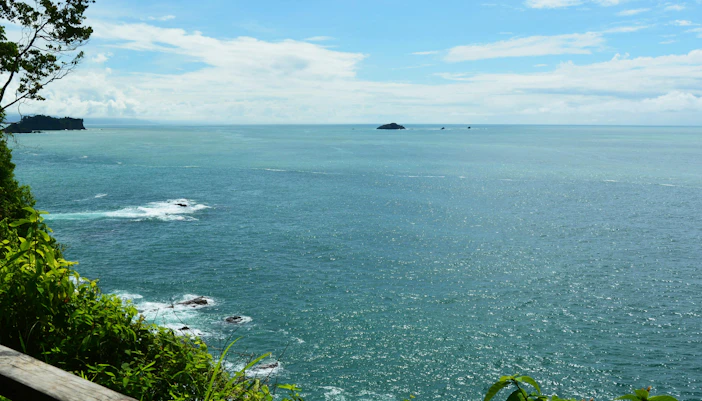
Commonly paired: Biesanz Beach
Distance: About 4–5km — roughly 10 minutes by car
Why people combine them: Biesanz gives you a quieter coastal stop outside the national park, with swimming, snorkeling, and kayaking. It works well after an early park visit if you want more beach time without simply repeating the same trail experience. Current location data places Biesanz about 4–5km from the national park.
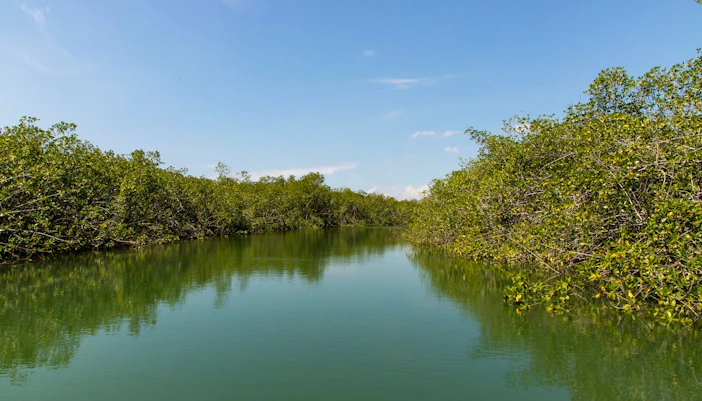
Commonly paired: Damas Island mangroves
Distance: Allow roughly 15–25 minutes by car to the mangrove area/tour departure point.
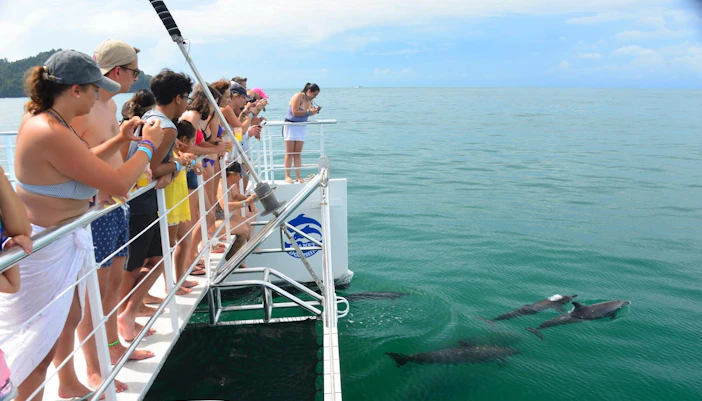
Why people combine them: This is the strongest complementary nature experience. Instead of rainforest trails and beaches, you explore calm mangrove waterways by kayak or boat, looking for monkeys, birds, reptiles, and other wildlife in a very different ecosystem. Local tour information places the mangroves roughly 15 minutes from Manuel Antonio.
Also nearby
Sukia Park
- Distance: In the Manuel Antonio area
- Worth knowing: A good option if you want to continue wildlife spotting after your national park visit. The nature refuge offers day and night wildlife walks, along with a butterfly garden, rescued crocodiles, jungle trails, and ziplining.
Marina Pez Vela
- Distance: About 7km — around 10 minutes by car from the national park. The marina itself lists Manuel Antonio National Park and its beaches as 7km away.
- Worth knowing: Head here for waterfront restaurants and shops or as the departure point for boat-based activities. Its location in Quepos makes it an easy stop after finishing your national park visit.
Eat, shop and stay near Manuel Antonio National Park
- On-site: The park concession stand covers snacks and drinks, and it is useful in a pinch, but it is better as a convenience fallback than a real meal stop.
- Espadilla Norte beachfront sodas (10–15 min walk, Playa Espadilla Norte area): Casual Costa Rican plates and fresh juice, best if you want a quick meal without going back into Quepos.
- Marina Pez Vela restaurants (15 min drive, Quepos waterfront): Better for a slower sit-down lunch with shade and sea views after you leave the park.
- Quepos town cafes (15 min drive, central Quepos): Usually the best-value option if you are heading back toward buses, shuttles, or onward travel.
- 💡 Pro tip: Eat after the park, not before the beach stop, because wet clothes and sand make a midday sit-down lunch much less appealing than a proper meal once you shower.
- Park concession and souvenir counter: Small snacks, drinks, and simple souvenirs are available inside the park rather than through a large standalone gift shop.
- Entrance craft stalls: The road outside the gate usually has small stands for beach basics and souvenirs, which is more practical than carrying extra items through the park.
Staying in Manuel Antonio or the south end of Quepos makes the visit much easier, especially if you want the 7am entry or a guided morning walk. The area leans touristy in places, but the payoff is short transfer times and an easy split between rainforest and beach. If you are spending more than one night on Costa Rica's central Pacific coast, it is a convenient base rather than your only good option.
- Price point: The closest stays skew mid-range to upscale, while Quepos usually gives you better value and easier access to buses and everyday services.
- Best for: Visitors who want first entry, families carrying beach gear, and anyone booking an early guided tour or trying to avoid a long same-day transfer.
- Consider instead: Central Quepos is the better fit for tighter budgets and transport convenience, while Dominical suits a more surf-heavy trip if you do not mind driving in for the park.
Frequently asked questions about visiting Manuel Antonio National Park
Plan around 4–6 hours for a balanced visit with wildlife trails and beach time. Around 3–4 hours works if you stick to the main trails and one beach, while swimming, wildlife stops, and additional trails can easily extend your visit.
Yes, Manuel Antonio National Park tickets are booked online, and popular dates can fill up, particularly during the dry season, weekends, and holiday periods. Booking ahead also makes it easier to secure the date that fits your itinerary.
Aim to arrive 15–30 minutes before your planned entry, giving yourself time to reach the entrance and have your ticket and ID ready. An early start also gives you cooler conditions and more time for trails and beaches before the park closes.
Yes, but a small daypack is the most practical choice. Bring only what you need for the trails and beach, such as sun protection, swimwear, and a reusable water bottle. Rental lockers are available if you need to store belongings.
Yes, personal photography is allowed. However, flash photography, drones, wildlife selfies, and using sounds, lasers, or reflective devices to attract animals are prohibited. Keep your distance and avoid interfering with wildlife for a photograph.
Yes, groups can explore independently or book a guided experience. A guided tour is particularly useful for groups focused on wildlife, since a naturalist can help spot sloths, monkeys, birds, and reptiles that are easy to miss without a trained eye.
Yes, the combination of wildlife, relatively manageable trails, and beaches makes the park suitable for families. With younger children, plan a shorter 3–4 hour visit combining a wildlife walk with one beach rather than trying to cover every trail.
The park is partially accessible. The 726m elevated El Manglar trail has rest areas and leads toward the beach, while an accessible walkway extends toward the sea. Other natural trails, inclines, and sandy areas can be difficult for visitors with limited mobility.
Yes, the park has a concession area where visitors can buy food and drinks and eat in the designated area. If you want a larger sit-down meal, you'll find more options around Manuel Antonio and in nearby Quepos.
No, standard admission should be booked online before your visit rather than relying on ticket sales at the entrance. Have your booking and the corresponding identification ready when you arrive.
Both work. Choose a naturalist-guided tour if spotting wildlife is your priority; guides use their experience and spotting scopes to find animals that can be difficult to see independently. Go self-guided if you mainly want flexibility for trails and beach time.